
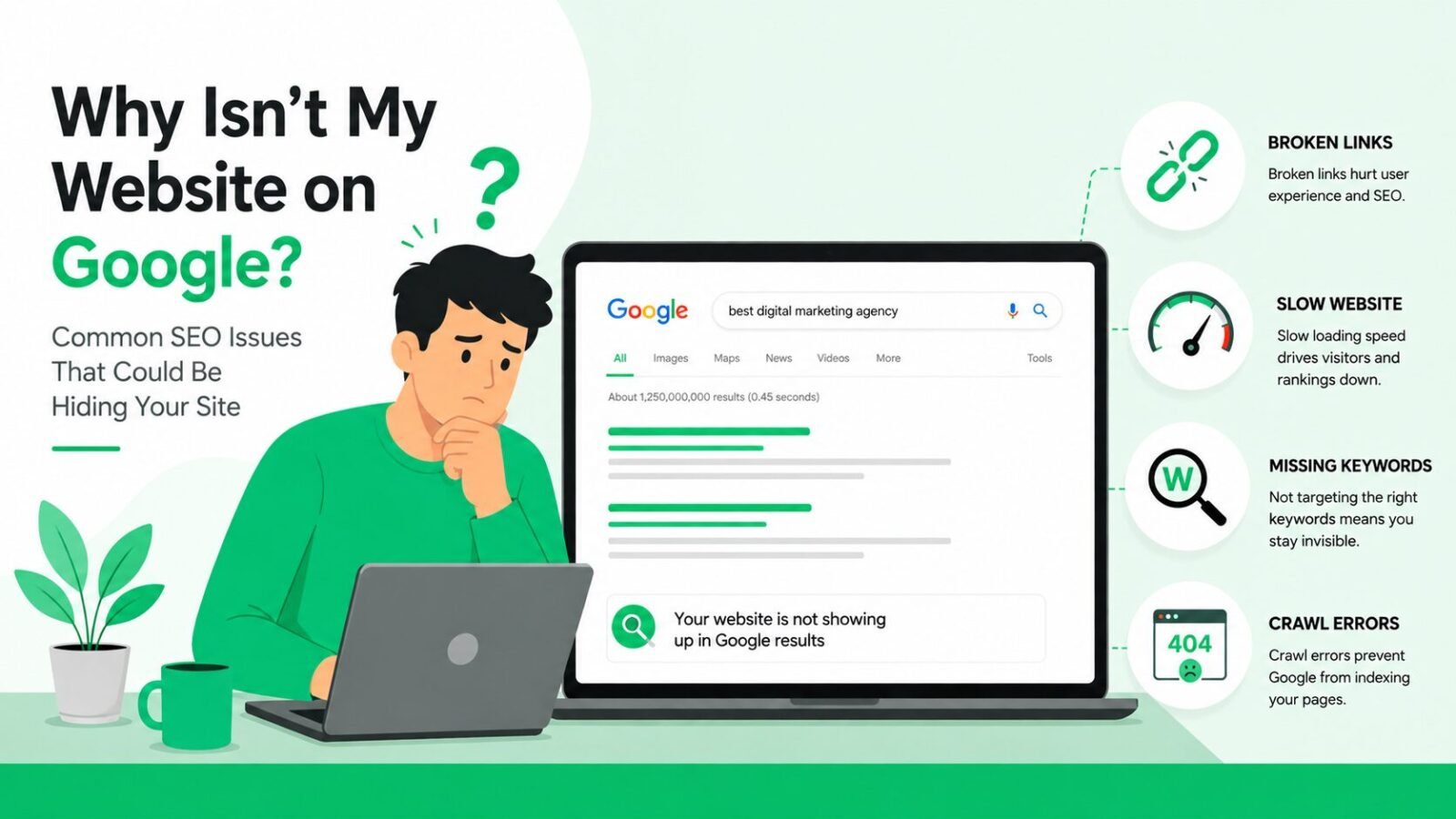
If your website not appearing on Google, the issue is rarely “no AI SEO.” It’s usually a mix of crawl problems, indexing blocks, weak keyword targeting, poor internal linking, or technical errors that prevent Google from understanding and trusting your pages.
Google ranks pages it can crawl, index, understand, and trust. If any one of these steps fails, your site stays invisible even if the design is great and the content looks fine.
Why website not ranking on google ? This guide walks through the exact AI SEO faults that keep websites out of search results and the practical fixes that help Google recognize, index, and rank your pages faster in 2026’s AI-driven search environment.
Technical SEO Issues That Kill Rankings
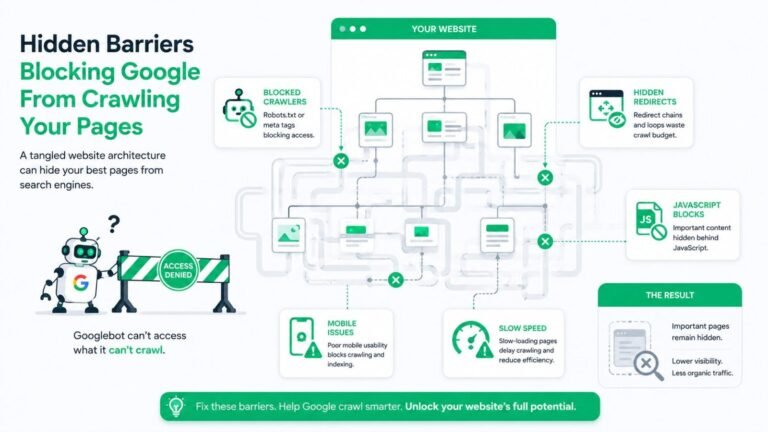
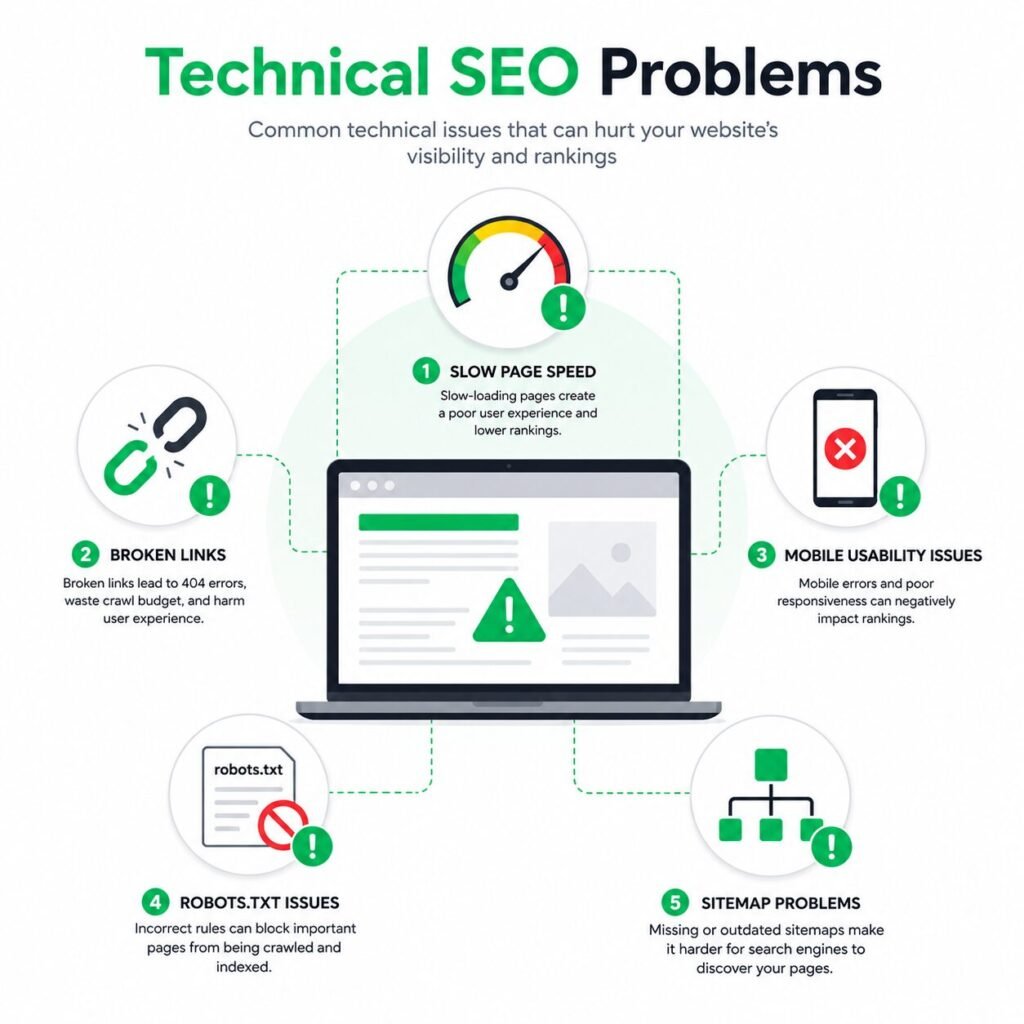
Technical AI SEO is the foundation of your website. If Google cannot properly crawl, access, or understand your site, no amount of content or keywords will help.
Common technical problems include:
- Slow website speed
- Broken links and server errors
- Improper use of robots.txt or noindex tags
- Poor mobile responsiveness
- HTTPS or security issues
- XML sitemap missing or incorrect
These issues prevent Googlebot from crawling and indexing your pages correctly. You may have great content, but if Google cannot access it, it will never rank.
Fix: Run a technical AI SEO audit using tools like Google Search Console and Screaming Frog to detect crawl errors, index issues, and performance problems.
On-Page SEO Mistakes That Stop Your Site from Ranking
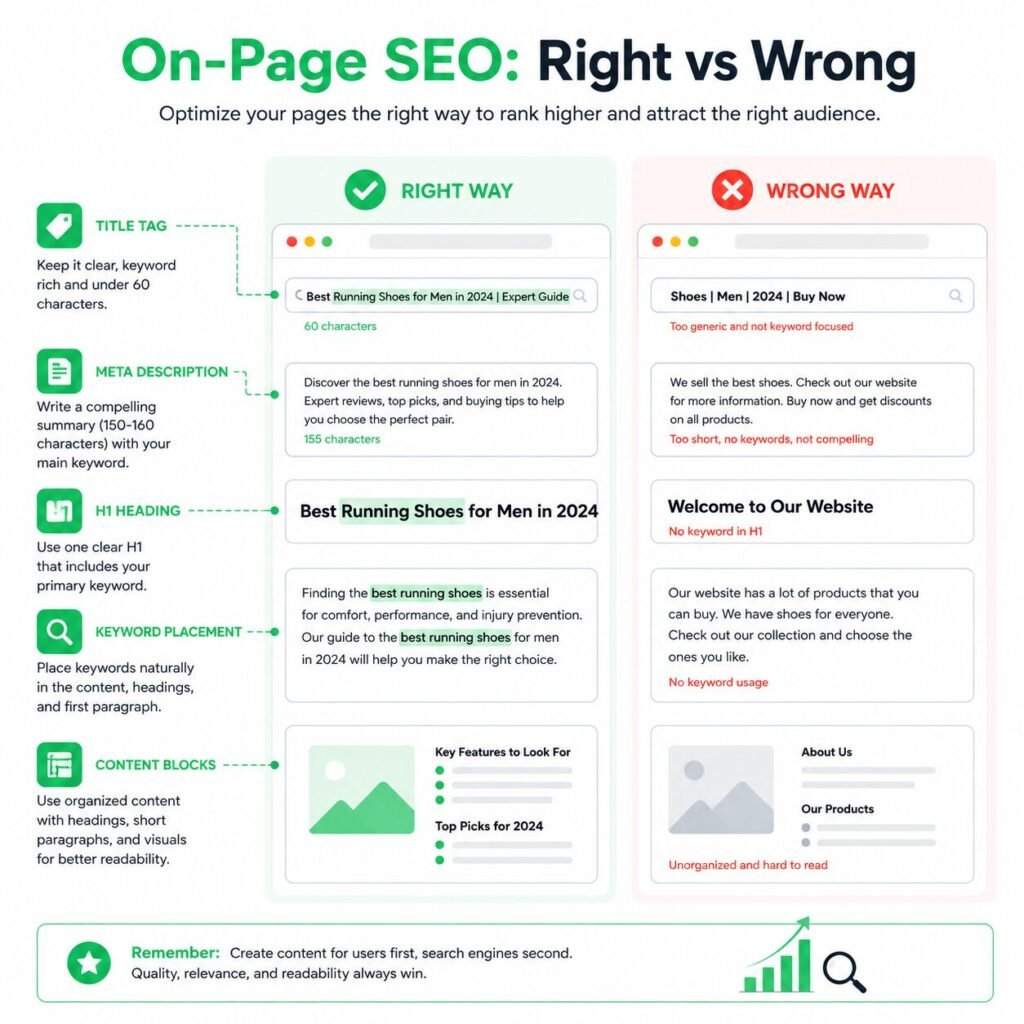
On-page AI SEO tells Google what your page is about. Many websites fail here by either over-optimizing or under-optimizing their pages.
Frequent on-page mistakes:
- Missing or poorly written meta titles and descriptions
- No clear H1 and heading structure
- Keyword stuffing or zero keyword targeting
- Thin or duplicate content
- Poor user experience and readability
Google looks for clarity and relevance. If your page does not clearly answer a search query, it will not rank.
Fix: Optimize each page with a clear keyword focus, proper heading structure, and helpful, user-first content.
Keyword Research Mistakes That Target the Wrong Traffic
One of the biggest reasons websites don’t rank is targeting the wrong keywords. Many businesses go after highly competitive keywords without understanding search intent.
Typical keyword mistakes:
- Targeting broad, high-competition terms
- Ignoring long-tail and problem-based queries
- Not matching content with search intent
- Creating pages without keyword mapping
For example, trying to rank for “AI SEO” instead of “why website not ranking on Google” makes ranking almost impossible for new or mid-level sites.
Fix: Focus on intent-driven, long-tail keywords that match what users are actually searching for.
Internal Linking Mistakes That Block Authority Flow
Internal linking is how authority flows across your website. Without proper internal links, Google treats pages as isolated pieces of content.
Common issues:
- Important pages not linked from other pages
- Random linking without strategy
- Over-linking to irrelevant pages
- No anchor text optimization
Internal links help Google understand which pages are important and how they relate to each other.
Fix: Create a strategic internal linking structure where blog posts support service pages and pillar pages.
Orphan Pages, Crawl Budget & Indexing Problems
Orphan pages are pages with no internal links pointing to them. Google struggles to find these pages, and as a result, they remain unindexed or poorly ranked.
Crawl budget issues occur when Google wastes time crawling low-value pages instead of important ones.
Signs of this problem:
- Pages not appearing in search results
- URLs marked as “Discovered currently not indexed”
- Large number of low-quality pages
Fix: Link orphan pages properly and remove or noindex low-value pages to optimize crawl budget.
How to Perform an AI SEO Audit to Find Ranking Issues ?
An AI SEO audit helps identify exactly what is stopping your website from ranking.
Steps include:
- Check indexing status in Google Search Console
- Analyze crawl errors and coverage reports
- Audit on-page SEO for key pages
- Review keyword targeting and intent
- Evaluate internal linking structure
- Check page speed and mobile usability
An audit gives you a clear roadmap instead of guessing what’s wrong.
Quick SEO Checklist to Diagnose Why Your Site Is Not Ranking
Use this quick checklist:
- Is your page indexed by Google?
- Does the page target a specific keyword?
- Is your website technically healthy?
- Are there internal links pointing to the page?
- Does the content solve a real search query?
- Is your site mobile-friendly and fast?
If you answer “no” to even two of these, that’s likely why you are not ranking.
When to Hire an SEO Agency to Fix Ranking Problems
Sometimes the issue is too technical or time-consuming to fix internally. If you’ve tried optimizing but still see no improvement, it may be time to work with AI SEO professionals.
An experienced agency can:
- Conduct a deep technical audit
- Fix crawl and index issues
- Develop a keyword and content strategy
- Improve internal linking and authority flow
- Track performance and adjust strategy
SEO is not about tricks it’s about fixing foundational problems and building long-term authority.
FAQ’s:
Why is my website not ranking on Google even after SEO?
Your site may have crawl or indexing issues, weak keyword targeting, poor internal linking, or technical errors. Google must crawl, understand, and trust your pages before ranking them.
How do I know if Google has indexed my website?
Search site:yourdomain.com on Google. If pages don’t appear, they are not indexed. You can also check indexing status in Google Search Console.
Can technical SEO problems stop my rankings?
Yes. Slow speed, mobile issues, broken links, wrong robots.txt settings, or missing sitemaps can block Google from properly crawling your site.
Do keywords still matter for ranking in 2026?
Yes, but search intent matters more. Target long-tail, problem-based keywords that match what users are searching for instead of broad competitive terms.
What are orphan pages and how do they affect AI SEO?
Orphan pages have no internal links pointing to them. Google struggles to find them, which leads to poor indexing and low rankings.
How often should I do an AI SEO audit?
You should perform a basic SEO audit every month and a detailed technical audit every 3–6 months to catch ranking issues early.
Can internal linking improve my website ranking?
Yes. Internal links help Google understand page importance and pass authority across your website, improving rankings.